Advertise

Advertisement

Search This Blog

 
Showing posts with label Australasia Travel. Show all posts

Australia Travel (next,...)

South Australia Travel Guide

Barossa Valley


South Australia is bounded by other states on the west, east and north, and flanked in the south by the Southern Ocean. Most of its population of 1.5 million live in the fertile coastal area and the valley of the Murray River, which is the state's only navigable river and drains about one-seventh of Australia. The northern landscape consists largely of dry wasteland, with several low mountain ranges. The most impressive mountains are the Mt Lofty-Flinders ranges, extending about 500 miles (800km) from Cape Jervis to the northern end of Lake Torrens. The capital of South Australia is Adelaide, known as the City of Churches.


South Australia is famous mainly for its wine and opals. More than half of Australia's wine is produced here, the vineyards flourishing in its Mediterranean climate, and the State's three major opal fields, Coober Pedy, Mintabie and Andamooka, supply around 80 percent of the total world production of these sought-after gemstones.


Adelaide Travel Guide
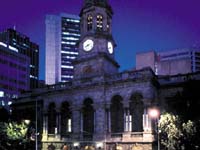

Adelaide Town HallWhy?  The pleasant South Australian capital city has a laid-back feel, making a holiday in Adelaide a relaxing and enjoyable experience. Those who travel to Adelaide are surprised to find a multitude of sophisticated museums, galleries and festivals, not to mention a healthy gastronomic culture. A holiday in Adelaide also allows visitors to explore Aboriginal natural history and traditions with several cultural attractions.

When?  Adelaide is delightful at any time of year. The city has a Mediterranean climate with hot summers and mild winters. Rain is possible between May and August.

Who for?  An Adelaide holiday is for anyone looking for a relaxing get-away, spiced with some art and culture along with good food. Travel to Adelaide for a therapeutic break where you can stroll through the colonial centre, chug down the Torrens River, or explore acres of parkland.

More Info:  Print out our Adelaide travel guide using the 'Print this Guide' tool for full information on the city. The Basics section includes useful information for international travellers from currency exchange to how much to tip, and how to phone home. The travel guide also reviews upcoming events, attractions and restaurants.
In keeping with its climate, Adelaide, capital of South Australia, has a Mediterranean ambience as it straddles the Torrens River, filled with churches, gardens, civic buildings, sidewalk cafes and a plethora of museums, galleries and festivals catering to the culturally inclined. The city was originally laid out in 1836 by Colonel Light in a square mile (three sq km) grid of wide streets with gracious colonial architecture. This has resulted in a compact inner city area, geared for easy exploring on foot, allowing the central area to be surrounded with hectares of parklands, walking trails, sports grounds and picnic areas on the banks of the river. The main boulevard is North Terrace, along which are the restored Mortlock Library, the Art Gallery of South Australia and the South Australian Museum with its spectacular whale skeleton and collection of Aboriginal natural history. Aboriginal culture is also catered for at Tandanya, a multi-arts cultural centre that has galleries, performance areas and a café serving native cuisine.

Visitors who have had enough of culture can take a cruise or gondola ride on the Torrens River, or ride a vintage tram to the nearby seaside town of Glenelg with its magnificent white, sandy beach, popular despite the occasional rumour of sharks. Adelaide's Central Market is the destination for 'foodies'. Among the noisy, colourful atmosphere and wondrous smells are fruit and vegetable stores and a large selection of meat and fish along with gourmet specialities introduced by the waves of immigrants who call Adelaide their home. Also popular with visitors is the Adelaide Zoo and Cleland Wildlife Park, which features local birds and animals including koalas and kangaroos.

===========================================================================

Tasmania Travel Guide


Cool morning near Derwent
Cool morning near Derwent © kiwi vic
Tasmania, the southern tip of Australian territory, is an island separated from the mainland by the Bass Strait. It is a place of wild and beautiful landscapes and friendly, relaxed people, with a temperate climate, rich history and slow pace of life. There is no hustle and bustle here, even in the cities. No traffic jams and no smog. Encircled by the Southern Ocean, Tasman Sea and Bass Strait, the air is clean, the water pure and the soil fertile. More than one third of Tasmania is preserved in a network of national parks and the Tasmanian Wilderness World Heritage Area. The island's European heritage goes back to the early 1800s, but Aboriginals first reached it about 40,000 years ago.

 =====================================

Victoria Travel Guide

Pinnacles, Phillip Island
Pinnacles, Phillip Island © Victoria Tourism
Victoria is Australia's second-smallest state, covering an area roughly the size of the British Isles. It hugs the tip of Australia’s east coast and has a decidedly clement climate. Packed into this relatively compact area is a wealth of diverse regional areas and attractions, from national parks and forests teeming with wildlife to wineries, lakes and mountains offering skiing, climbing and hiking. Best of all, many of Victoria's unique and varied landscapes are easily accessible as day trips from the state capital of Melbourne.


Melbourne 

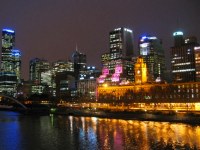
Yarra River and Melbourne SkylineWhy?  It is often marketed as Australia's sophisticated 'culture capital', but in fact a holiday in Melbourne will reveal there is plenty more to do and see other than art galleries and theatre. Travel to Melbourne for a leisurely break, enjoying the many parks and recreational facilities, stroll along the St Kilda Esplanade, explore the river-front Southgate development, or watch an exciting Aussie Rules Football match.

When?  Peak seasons for holidays in Melbourne are dictated more by events than the weather, so it is wise to check what's on and book accommodation early to avoid disappointment. Busy times are late October when the Spring Racing Carnival and International Festival take place, early March for the Formula 1 Grand Prix, and late January during the Australian Tennis Open. Weather-wise it is best not to travel to Melbourne in winter, when it is dull and grey. The best season to holiday in Melbourne is autumn (March to May).

Who for?  A holiday in Melbourne is for anyone and everyone. The city has something to offer all ages and stages.

More Info:  Before you travel to Melbourne familiarise yourself with all aspects of the city using our Melbourne travel guide, which is updated regularly and can be printed or emailed for convenience.Australia's second-largest city, Melbourne, capital of Victoria, is the most European in style with trams rattling through streets past Victorian buildings, parks and outdoor cafes. The city centre is laid out in a simple grid pattern, the long, wide north-south streets gently sloping down to the Yarra River, crossed by a mix of narrow lanes, and the main shopping streets such as Bourke and Collins Streets. The CBD is easily navigable by foot, and if a rest is needed after a session of sightseeing or shopping there are numerous parks nearby, such as the Royal Botanical Gardens, Fitzroy Gardens and Carlton Gardens. Alternatively, you can take one of Melbourne's signature attractions, a tram. The burgundy-coloured City Circle tram is free, and is a good way to get your bearings as well as explore the inner city, while for those wanting to go further afield the tram network extends about 10 miles (15km) into the Melbourne suburbs.

Melbourne's population of over three million is made up of a variety of cultures, including Chinese, Italian, Vietnamese, Lebanese and Greek, who have all added their touch to this thriving city. A fierce rivalry exists between the cities of Melbourne and Sydney, but local residents bask in the satisfying knowledge that Melbourne beats Sydney hands-down on the cultural front, noted for its wide variety of high standard performing arts, as well as its sport. The city plays host to world-renowned sporting events like the Melbourne Cup, Australian Open Tennis and Qantas Australia Grand Prix. Around the city, within an hour's drive, there are numerous places worth visiting, including the Macedon Ranges, which is Australia's spa capital with its world-renowned mineral springs, as well as the spectacular Great Ocean Road along the coast, which passes stunning rock formations such as the Twelve Apostles. One of the most popular self-drive routes for tourists to follow is the circular Great Southern Touring Route, which includes spectacular scenery and takes in some of Victoria's most beautiful, scenic and cultural attractions.
 =========================================================================


Western Australia Travel Guide

Cable Beach, Broome
Cable Beach, Broome © WA Tourism
The state of Western Australia is big, bold and beautiful, and despite covering one third of Australia has a population of fewer than two million. It has miles of coastline washed by the Indian Ocean and a range of climatic zones from tropical through to temperate. The northern area is raw and harsh; the south is characterised by rolling green pasture; to the west is the ocean while to the east lie golden wheat fields.


The true richness of Western Australia lies in its huge mineral deposits – gold, diamonds, iron ore, bauxite, nickel, natural gas and oil lie under the ground and provide employment for much of the population. The goldfields of Kalgoorlie still produce a couple of thousand of ounces of gold a day. The young and vital state capital, Perth, was built on the mineral wealth of the state and offers a leisurely lifestyle centred on its lovely beaches for its large immigrant population.


Western Australia is big on extremes; it boasts 8,000 species of wildflower, more than any other region in the world. It has the smallest church, the largest casino and the narrowest pub in the Southern Hemisphere. Its rocky coastline has also been responsible for plenty of tragedy - more than 700 vessels have come to grief here since the first Dutch sailors arrived on the shores of the state in the 17th century.


Perth Travel Guide
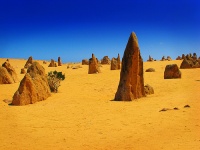
The PinnaclesWhy?  Sunbathe, indulge in some wine tasting, shop for pearls, wander the waterfront of Fremantle, or visit the fun-fair. These are just some of the many diversions that draw people to enjoy a holiday in Perth, Australia's laid-back, remote western city, which is surrounded by some stunning scenery.

When?  Unless you really like it hot, the best times to travel to Perth are during spring (September to November) and autumn (March to May). Summers are extremely hot and dry, and winters wet and mild. Each season in Western Australia, though, offers something special that draws visitors to holiday in Perth, like the explosion of wild flowers in spring, and the whale-watching opportunities during autumn. Even winter is delightful when the countryside turns lush and green.

Who for?  Anyone and everyone will find plenty to do and see on a holiday in Perth. The city is packed with attractions to suit everyone, especially food-lovers, who will find more restaurants here per capita than in any other Australian city.

More Info:  If you are planning a holiday in Perth make use of our Perth travel guide to find out all you need to know to make the best use of your time in this scenic city. The Perth travel guide features full details of attractions, excursions and events and is updated regularly.
Most of the two million people who live in Western Australia reside in the sophisticated and scenic state capital. Perth grew on the banks of the Swan River, named after the Scottish city of the same name, and was proclaimed by Queen Victoria as a city in 1856. The discovery of gold in Kalgoorlie and Coolgardie, to the east of the city, in the 1890s led to a dramatic rise in its population and an economic boom. Another boom followed in the 1960s with the mining profits of iron ore and nickel.

Today the city is characterised by numerous waterways, green parks and a compact central business district. There is plenty to occupy visitors in Perth, from touring the city by tram or bus, enjoying watersports on the Swan River or just sipping a glass of the famous local wine in a riverside or beachside restaurant. Perth has more restaurants per capita than any other Australian city. Not far from the city is Western Australia’s oldest wine-growing region, Swan Valley, which welcomes tourists to visit the many award-winning family-owned wineries, which offer alfresco and restaurant meals and cellar tastings.

Perth is also the site of the world’s oldest operating mint, and boasts several museums and art galleries, historic buildings, a casino and a good variety of shopping opportunities. Last, but not least, the city offers more than 50 miles (80km) of white sandy beaches in close proximity. Among the most popular are Cottesloe and Scarborough.
....................................................................................................................................................................

New Zealand Travel Guide

Overview

Urupukapuka Island, Bay of Islands, North Island
Urupukapuka Island, Bay of Islands, North Island © New Zealand Tourist Board
New Zealand, 'Land of the Long White Cloud', is a small, sparsely populated country consisting of two major islands, North and South Island, and a scattering of smaller ones. Despite its small size it is crammed with magnificent natural beauty and has an incredible amount to offer; the only complaint travellers have is that they haven't allowed enough time in the country. Fresh air, breathtaking scenery and outdoor activities are the main attractions of New Zealand, with a tremendously friendly, honest and helpful population, colloquially nicknamed after their country's distinct symbol, the unusual but amiable flightless kiwi bird.


The two islands have surprisingly different characters. The North Island has dramatic volcanic landscapes and highly active thermal areas, long stretches of beautiful beaches and excellent sailing, ancient indigenous forests and a strong Maori cultural influence. The South Island has a slower pace of life dominated by a magnificent spine of mountains, the snow-covered Southern Alps, and the spectacular scenery of the southern waterways of the fjord lands, with glaciers, deep lakes and verdant forests.


The signing of the Treaty of Waitangi in 1840 was New Zealand's founding document, an attempt to settle disputes between the European settlers and the Maoris, conceding the country to British rule while guaranteeing the Maori people possession of their land and cultural identity. Today, integration has been replaced by a policy of upholding two different cultures alongside each other. Their shared love of sport, most notably the revered national sport of rugby union, and their enthusiasm for adventure and the outdoors is the unifying factor among the whole population.


New Zealand offers a huge variety of action-packed and laid back activities, from bungee jumping to skiing, swimming with dolphins, scenic flights and boat cruises on the fjords, as well as several world famous walking trails with unrivalled scenery. Alternatively visitors can immerse themselves in culture at the museums and galleries of the country's main cities - Auckland and the capital Wellington in the North, and Christ Church in the south.


New Zealand is an easy and compact place in which to travel and its spectacularly dramatic landscape alone, famous for its setting for the 'The Lord of the Rings' film trilogy, makes the long trip to these southern islands more than worthwhile.
.....................................................................................................................................................................


Papua New Guinea Travel Guide

Overview

Papua New Guinea landscape
Papua New Guinea landscape © Nickaroundtheworld
To say Papua New Guinea (PNG) is remote would understate its degree of isolation. The nation stretches across half of the mountainous island of New Guinea it shares with Indonesia, to the jungle lowlands and dozens of islands out to the Pacific.


Hundreds of different cultures are evident in a relatively small amount of land. Communities have replicated the effect of isolated evolution and cultures have grown into wild forms. As evidence of the drastic isolation, some mountain communities have only just discovered neighbouring tribes, despite living in close proximity for thousands of years. Some communities may still have had no contact with the outside world. Even Port Moresby, PNG's capital and largest city, has no roads connecting it to other major towns. Such drastic separation has fostered more than 800 languages and a multitude of diverse customs and cultures. Yet the nation is unusually unified in religion as Christian missionaries have converted 96 percent of the country.


With almost no connecting paved roads, air travel is mandatory for getting around the country, even though there are only four paved runways. Airplanes flying over the jungle were worshiped in 'cargo cults' for years, especially in WWII. Locals would watch mesmerised at new airport runways as their spirits descended from the heavens. Airline safety has apparently not improved since and travellers wanting to avoid prematurely turning into spirits themselves should review recent airline safety information.


Intrepid travellers take to the jungle and mountains on foot. The most famous route in the country is the Kokoda Track, a 60 mile (96km) hike popular with Australian tourists. The region it covers saw intense fighting between Japanese and Australian forces in WWII. Highland trekking is also a tempting but dangerous. The mountain isolation is extreme and fighting between tribes can endanger tourists. Yet for the undeterred July through August is the best weather to go. Surfers can best hit the waves from November to April in the north and June to September in the south.


PNG's diversity means two trips can never be the same so travelers are welcome to explore their own piece of this wild land.

-----------------------------------------------------------------------------------------------------------


Read more...

Australasia Travels (next)

New South Wales Travel Guide

Overview

Avoca Beach, central coast
Avoca Beach, central coast © NSW Tourism


New South Wales, which contains Australia's oldest and most vibrant major city, Sydney, is the country's premier state. It has the highest population, attracts the most visitors and has a range of experiences to offer the tourist that is unrivalled by most countries, let alone states, in the world. Breathtaking beaches and coastlines, World Heritage National Parks, a taste of the real Australian outback, snow-capped mountains, lush farming country, Aboriginal culture and dazzling city lights - all are on offer in New South Wales.


The state was named by Captain James Cook when he first stepped ashore in Australia at what is now Sydney Harbour and claimed the country for the British in 1770. The epicentre of New South Wales is the huge, sunny, sexy and sophisticated city of Sydney, characterised by its white-sailed Opera House and Harbour Bridge. Beyond the slick city life though, New South Wales also offers the chance to escape to the Snowy or Blue Mountains, drive through the rolling wine farm country of the Hunter Valley, enjoy get-aways to the historic villages of the southern highlands or indulge in whale-watching, surfing and swimming at free-spirited coastal villages and towns.

Sydney Travel Guide

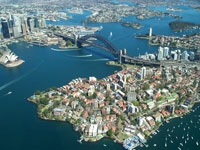
Sydney Harbour aerialWhy?  Sunny Sydney is one of the world's top holiday destinations, offering stunning beaches, vibrant nightlife, superb shopping and delectable restaurants.

When?  The most popular time to travel to Sydney is during the summer months, between November and March, when it is constantly hot and sunny. Winter in Sydney (June to August) is mild but damp, and nights can be chilly.

Who for?  Sydney caters for all ages. Sun-lovers head for the beaches; families can explore the attractions of Darling Harbour; gourmets delight in the restaurants at The Rocks; adventurers can climb the iconic Harbour Bridge; while the less active can stroll the magnificent Botanic Gardens. Sydney is also a popular gay holiday destination, especially during late February when the annual Gay and Lesbian Mardis Gras takes place.

More Info:  Our Sydney travel guide includes everything from essential information on currency and entry requirements to full reviews of restaurants, attractions and upcoming events.
Sunny, seductive Sydney is a high contender for the title of the world's most ideal city. It is slick and smart, the streets are clean, the neighbourhoods and busy pedestrian precincts pristine, the parks sublime, the water in the huge harbour blue, and the landmark buildings breath-taking. Sydney's population is approaching five million, but it is easy to leave the frenetic urban pace behind with just a simple ferry ride to the North Shore for a bush walk, enjoy a stroll along the harbour beaches or take any one of a number of daytrips to explore the 'real' Australia on the city's doorstep.

Just like its characteristic white-sailed Opera House, Sydney seems to cruise effortlessly through nights and days filled with myriad entertainment opportunities, sophisticated shopping, memorable museums, and strings of beautiful beaches. Visitors find it exhausting to take it all in, even though the tourist precinct where most of the interesting attractions are to be found is concentrated in quite a small area around the downtown waterfront and harbour area.

The fact that Sydney is a thriving seaport and industrial city has been cleverly concealed behind attractive pleasure and leisure grounds and residential suburbs, making full use of the scenic, watery geographical location. The harbour area is dominated by the span of one of the world's largest arched bridges, backed by towering skyscrapers. It is all a far cry from the remote penal colony established by the British back in 1788.Another plus for visitors is that compared to most big cities Sydney offers excellent, reasonably priced food, accommodation and public transport. The city also has an excellent suburban rail network, with its hub at Circular Quay in the city centre, and full use is made of the waterways with ferries and passenger jet boats plying to and from various points.

.....................................................................................................................................................................


Northern Territory Travel Guide


Katherine Gorge
Katherine Gorge © NT Tourist Commission
A slice through the centre of Australia, the Northern Territory contains the 'Red Centre' of the country with its rugged bush, ancient Aboriginal cultures and amazing plant and wildlife. The abundant wide open space is the 'Outback' of Australia. The Northern Territory is twice the size of California, but is inhabited by fewer than 200,000 people. It draws tourists, however, because it forms the backdrop for adventure on a grand scale - hot-air ballooning, bushwalking, four-wheel drive safaris, camel rides, all of it accessible from good roads and from bases with quality accommodation.


From Darwin, the capital of Northern Australia in the far north, down to the mysterious Uluru (Ayers Rock) and the pioneering town of Alice Springs in the south, the Northern Territory is a land of contrasts. Here you will meet some of Australia's most colourful characters and experience deserts, islands and beaches, wetlands teeming with birds and crocodiles, shining rivers and ancient Aboriginal sites.


Travellers should be aware that especially during the summer months (usually between October and May) the shallow coastal waters of northern Australia become infested with marine stingers, commonly known as box jellyfish, whose sting is highly dangerous and can be deadly. Many beaches offer protected swimming with stinger nets in place, or enclosed tidal pools, and surf lifesavers may warn people off infested beaches. Swimmers may also wear a lycra 'stinger suit' as protection.

Alice Springs Travel Guide

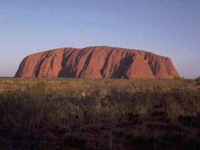
Uluru Ayers Rock AustraliaWhy?  Once a remote outpost, it is now easy to travel to Alice Springs, situated in the heart of the Australian Outback. A holiday in Alice Springs is an exciting true Australian experience, its proximity to the desert and the remarkable natural monolith, Uluru (Ayers Rock) drawing thousands of tourists every year. 'The Alice', as it is known, is also the focus of Aboriginal culture.

When?  There is no need to pack a brolly when you travel to Alice Springs, where rain is a rarity. It is hot and dry all year round, but nights can be very cold in winter (July/August). The city has an exciting event calendar so it is a good idea to plan your Alice Springs holiday to coincide with one of these, like the Camel Cup tournament, Finke Desert Race or Alice Springs Beanie Festival, see our event pages for details.

Who for?  Anyone who has a fascination with the rough and ready life of Central Australia will enjoy a holiday in Alice Springs, which is an ideal base for excursions into the surrounding desert.

More Info:  To find out how to travel to Alice Springs, and what to expect when you get there, consult our up-to-date, comprehensive Alice Springs travel guide.
Alice Springs, the vibrant hub of central Australia, grew up around a permanent waterhole that was a key terminal for the Overland Telegraph Station in 1870. It became a tough frontier town serviced by camel trains from the railhead at Oodnadatta, until the railway reached it in 1929 and it became a major terminus centre. Today the city, with a population of 25,000 and stylish shopping and dining facilities, provides a perfect base from which to access all of the surrounding natural wonders, including Uluru (Ayer's Rock), and learn more about the local Arrernte Aboriginal tribal group who have inhabited the area for 20,000 years. The city is also the point from which intrepid adventurers strike south to explore the Simpson Desert, or east to visit the ghost towns of the MacDonnell Ranges. Alice Springs has good connections to Australia's capital cities; there are daily flights to and from the capitals and road and rail access from all capital cities is possible.


 (more....)

Read more...

Australasia Travels

Overview Australia

Iconically Australia
Iconically Australia © Karl Blackwell


Australia is the sixth largest country in the world - more or less the same size as mainland USA. This vast land however also has the lowest population density in the world, with only two people per square kilometre.


Australia is politically divided into six states and two territories, each one offering a different experience for the traveller. There is the drama of the remote 'Outback', the colourful spectacle of the Great Barrier Reef and its coral islands, the excitement of the cosmopolitan cities, the sun and surf at some of the best beaches in the world, and the tropical rainforests of Western Australia. The list is endless in this diverse land of adventure, which boasts 2,000 national parks and 14 World Heritage-listed areas, along with more than 7,000 beaches.


Australia is a land of character too, with its melting pot of cultures. For more than 50,000 years the Aboriginal people lived and thrived in the continent's unique environment. It is believed the Aboriginals are the world's oldest civilisation, and in recent years there has been a resurgence of interest in keeping the Aboriginal culture alive and flourishing.


The vast continent at the bottom of the world was the last landmass to be discovered by European explorers. Captain James Cook arrived in Botany Bay in 1770 and sparked off generations of emigration to Australia, which for some time served as a penal colony. It was not until 1860 that two explorers - Robert Burke and William Wills - became the first Europeans to cross Australia from south to north. The country remains a magnet for modern explorers and adventurers and has a great deal to offer tourists and holidaymakers.

Overview American Samoa

Tutuila in American Samoa
Tutuila in American Samoa © Wikimedia Commons
Aptly named ‘The Heart of Polynesia’ and nestled deep in the Samoan Archipelago, where the warm tropical waters of the South Pacific Ocean greet white palm-fringed shores, lies the hidden treasure of American Samoa.

Inhabited as early as 1000 BC by Polynesian navigators, Samoa was ‘discovered’ by European explorers in the 18th century and occupied by the US in 1900. Not to be confused with Western Samoa, American Samoa comprises six islands located in the Samoan Archipelago halfway between Hawaii and New Zealand and while there is a strong American influence in the islands, American Samoans proudly retain their cultural heritage. It is advisable to respect the Samoan way while visiting their country.

The main island of Tutuila is mountainous and wonderfully scenic with good hiking in the National Park of American Samoa. Transport round the island is cheap and buses operate from the market in Fagatogo. There’s the usual list of attractions including waterfalls, villages, native wildlife, beaches, and archaeological sites to see here. It is also home to the capital and only port of call, Pago Pago, which is both an entertaining and informative village and the US-style stores, restaurants and bars are a refreshing change for anyone who has been travelling the Pacific islands for long.

Boasting some of the most breathtakingly beautiful beaches anywhere in the South Pacific, and a warm and humid climate, there’s plenty of time to explore the biodiversity of marine life found off the shores of the American Samoan islands. One such place is Fagatele Bay National Marine Sanctuary, a tropical reef displaying flamboyant tropical fish, crabs, lobster, sharks and octopus offering exciting snorkelling and diving.

The National park of American Samoa, which is essentially three parks laid out across four extinct volcano islands, offers some of the best scenery from miles of sparkling white shorelines, to some of the most accessible coral reefs and verdant rainforests, such as Lata Mountain on Ta’u, which surpasses all others in its wild and remote forests, free-flowing streams and rugged coastline.

Two small guesthouses on the smaller Ofu and Olosega islands provide affordable accommodation and all the amenities a traveller could need. A local airline flies between Pago Pago and Ofu twice a day. Mosquitoes are about the only nuisance here, and visitors are advised to arm themselves with malaria prophylaxis and repellent.

The weather is warm, the people hospitable and the country exquisitely beautiful and the memory of American Samoa is one that will be relived for years to come by those who visit here.


Capital Territory Travel Guide


The Australian Capital Territory (ACT) was created as a compromise; both Sydney and Melbourne thought that they should be Australia's capital city and the authorities decided that the only answer was to create a new city, within its own territory, between the two rivals. ACT is landlocked in the mountainous state of south-eastern New South Wales; Sydney is 190 miles (306km) to the northwest. The territory is tiny by Australian standards; it is 50 miles (80km) from north to south and about 20 miles (30km) wide. The capital city, Canberra, and its surrounding suburbs are in the northeast of the territory and surrounded by the artificial Lake Burley Griffin; the parliament and other government buildings are located to the south of the lake, and in the north is Civic, where visitors will find the university, the main shopping and business district and most of the nightlife, which, contrary to reputation, is fairly lively. The Namadgi National Park occupies the whole southwestern area of the Territory.
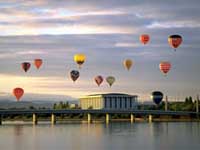
Balloons over the capitalWhy?  A holiday in Canberra, Australia's pristine showpiece capital city, is an experience that leaves one with a sense that all is well with the modern world. In a beautiful setting, and packed with attractive buildings and interesting high-class sight-seeing opportunities, those who travel to Canberra find it sophisticated and cultured, but friendly and welcoming.

When?  A holiday in Canberra can be taken any time of year, with the sun shining over this well-planned city nearly every day. Mid-winter temperatures (June and July) can drop to chilly levels, but the skies usually remain blue. A good time to travel to Canberra on holiday is in early February when the annual National Multicultural Festival, an extravaganza of music and art, is held.

Who for?  Anyone interested in the history and politics of Australia, and the country's artistic heritage, will enjoy spending a holiday in Canberra seeing the sights. The city also caters for the more active, offering plenty of recreational opportunities, most centred on lovely Lake Burley Griffin, like kayaking on the lake, or cycling around it.

More Info : To make the most of a Canberra holiday plan ahead with the help of our detailed Canberra travel guide, which lists all the major events and attractions on offer in the city. The travel guide also explains how to get around.Australia's capital city, Canberra, had a difficult birth, punctuated by political infighting, wars and the Great Depression, but it is now a thriving modern city which, together with its surrounds, makes up Australia's Capital Territory. Canberra lies 95 miles (150km) in from the East Coast, by road 175 miles (280km) from Sydney and 415 miles (660km) from Melbourne.

Like most capitals of the world, Canberra boasts an architectural heritage in its civic and Government buildings, but Canberra is also blessed with some of the loveliest surroundings of any national capital. There are more than 30 Australian artistic and cultural institutions located in Canberra, ranging from the Australian War Memorial to Parliament House, surmounted by a colossal stainless-steel flagpole and set in 23 hectares of gardens. In the centre of Lake Burley Griffin, the impressive Captain Cook Memorial Jet shoots a six-ton column of water 482 feet (147m) into the air, while on the shore the National Gallery of Australia houses the country's premier public art collection spanning about 5,000 years of international art.

Canberra is also known for its spring festival, Floriade, when the parks and gardens surrounding Lake Burley Griffin explode with colourful displays of massed tulips and other blooms. The city, with its many parklands, is especially beautiful in spring and autumn.

More  --->
Read more...

Labels

 
.::Environment & Climate Change::. © 2011 DheTemplate.com & Main Blogger. Supported by Makeityourring Diamond Engagement Rings

You can add link or short description here